I got back nearly a week ago from a fantastic time at Philmont, and found myself immersed in work, trying to recover from a sleep deficit, and trying to get ready to get my son off to his summer camp with our local troop. I just couldn't quite force myself to sit down at the computer in the evening.
The result was that blogging took a back seat. June is going to end up a very light month for blogging especially since tomorrow is parent's day at Bartle Scout Reservation, and Susan and I are going out for the day. I will be staying for the next three days helping out with the nature merit badges and perhaps some handicrafts.
Then I will return to Columbia, work one day, and then take a three day Fourth of July weekend during which we'll go and fetch the boy from camp.
So why didn't I just take July 3rd off as well? I am still asking myself that question.
I'll try and do better in July
Showing posts with label vacation. Show all posts
Showing posts with label vacation. Show all posts
Saturday, June 28, 2008

Sunday, June 15, 2008
From New Mexico
I am taking advantage of what will probably be my last opportunity to get on the internet for the next 8 days. The Hancocks are staying at the Super 8 in Raton, New Mexico and will leave in a little while for Philmont Scout Ranch (aka Boy Scout heaven).
We left Columbia during thunderstorms, but by the time we reached the Kansas Turnpike, it was looking quite nice outside.
A special pleasure was stopping by one of Susan's college friends in a small town south of US 54 heading west from Wichita. MB is the host of the "Rambling Down the Road" blog and it took me a while, but I finally figured out who she was from the various clues in her blog. She was a senior when I came to SC as a fledgling instructor in Biology and she needed a botany course to graduate. She also lived in the same dorm as my future spouse who was a freshman that year. 30 years may seem like a long time, but aside from my nearly black beard turning nearly solid gray, the three of us were remarkably close to the way we looked in the late 1970s. It's really great to make connections over the years, and blogging has done its share in helping bring people back together.
After we left MB and her daughter we took advantage of the daylight and got as far as Minneola, where we stayed the night in a rather quiet motel. The next day we got off about 8:00am and ate breakfast a couple towns west, and proceeded on to Raton where we had reservations.
Today we'll take the hour drive to Philmont and drop Liam off for his week-long advanced leadership course. Susan and I will have nothing to do but visit antique and craft shops in Cimarron until our official arrival at 1:00pm. The two of us are attending courses at the Philmont Training Center and will be plenty occupied on our own.
Still, all-in-all, a week at the Philmont Training Center is a great family vacation, and this is the third time Liam and I have been out. Susan has been out twice, but after the first time we went in 2002 it has she who asked "when are we coming back"?
The temperature is expected to be in the high 80s with lows in in high 40s and low 50s. The altitude is over 6000' and the humidity is low. We are already feeling the need to drink massive quantities of water, and most of it is sweated away.
Anyway, unless by some magic Philmont has installed wireless, I'll be back blogging next weekend.
Monday, December 24, 2007
We're here and safe
We left on Saturday to visit my parents in Houston, and what should have been an uneventful drive turned rather eventful.
We left Columbia expecting to get south of Oklahoma City before the expected bad weather hit southern Kansas and Oklahoma. That was not to be the case. Rain started in Kansas City, and by the time we got to Paola, it had turned to sleet. By Emporia, things were slow, but passable. As we moved southwest on the Kansas Turnpike, things went scary in a hurry. We were in the position of not being able to turn back, but at the same time not daring to stop. So we continued to Wichita, and got off due to stop-and-go traffic caused by a semi jackknifed about five miles down the turnpike.
Our intention was to find a motel, but Wichita had no vacancies at every place we looked. We decided to travel on a highway parallel to I-35 for a while and check out the towns just south of Wichita. Still no dice. I looked over toward the Turnpike and noticed that the traffic was moving again, and it was not closed as we had been led to believe, so we got on and headed into Oklahoma. We stopped at every interchange where we could see motels, and they were all full. Finally, we founf a room at Guthrie, OK, and settled into a much needed sleep. I had 12 hours behind the wheel, and that was quite enough. The road problems in Oklahoma were not blizzard conditions; they were black ice. I'm just VERY thankful we did not have to spend the night in the car at a truck stop.
Sunday morning (when we had hoped to be in northern Texas), we resumed our trip. The roads rapidly improved, and by the time we were south of Norman, OK things looked pretty good. We finally arrived in Houston around 6:00pm and are still here enjoying family.
Anyway, Merry Christmas to all of you!
Tuesday, November 21, 2006
Brazos Bend State Park
Brazos Bend State Park is a 5000 acre park about 30 miles south of Houston. This area is represents the first Anglo settlement in Texas, but archaeologists believe that people first visited the area around 300 B.C. This particular area was part of the land grant from the Mexican government to Stephen F. Austin in the early 1800s. This was an important area in commerce, as the Brazos River is navigable, and served to supply the settlements along its course.
This park is home to a population of American Alligators, and we were hoping to see some, but considering the physical limitations of two of us, we were only able to enjoy a nature walk that looped around Creekfield Lake. There was plenty to see and enjoy, and also to listen to. There were Great Blue Herons, Snowy Egrets, American Coots, Common Gallinules, Common Crows, various sparrows, and I heard what sure sounded like a Pileated Woodpecker.
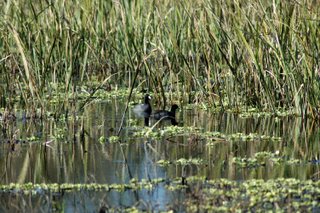
American Coots were pretty common in Creekfield Lake.
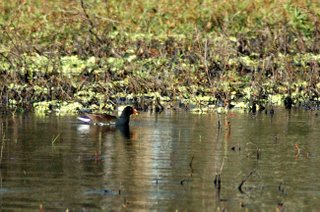
This striking bird is a Common Gallinule, a member of the coot, gallinule and rail family. Note the red beak with its yellow tip. (You'll need to click the image to open it in its normal size.) This is a new addition to my life list.

This little caterpillar was fairly common on the emergent vegetation of Creekfield Lake.
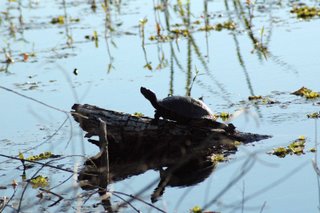
This was the only aquatic reptile we saw, but then we were not able to get to the prime alligator viewing areas.
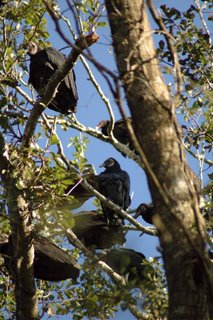
If there was anything that characterized this visit to Brazos Bend, it would be the vultures. I estimate about there were about 50 Black and Turkey Vultures. They tended to roost in separate trees, but if you look carefully, the uppermost bird on the right in this group of Black Vulture is actually a Turkey Vulture.

Every so often a group of vultures would take flight and circle around. The Black Vultures have the light parts of their wings at the tip, while the Turkey Vultures have the light area extending from the tip along the trailing edge of the wing.
Brazos Bend State Park offers camping, hiking, cycling, birdwatching, fishing, and camping. (Important point of alligator etiquette: If you catch a fish and an alligator wants it, let it have it.)
This park is home to a population of American Alligators, and we were hoping to see some, but considering the physical limitations of two of us, we were only able to enjoy a nature walk that looped around Creekfield Lake. There was plenty to see and enjoy, and also to listen to. There were Great Blue Herons, Snowy Egrets, American Coots, Common Gallinules, Common Crows, various sparrows, and I heard what sure sounded like a Pileated Woodpecker.

American Coots were pretty common in Creekfield Lake.

This striking bird is a Common Gallinule, a member of the coot, gallinule and rail family. Note the red beak with its yellow tip. (You'll need to click the image to open it in its normal size.) This is a new addition to my life list.

This little caterpillar was fairly common on the emergent vegetation of Creekfield Lake.
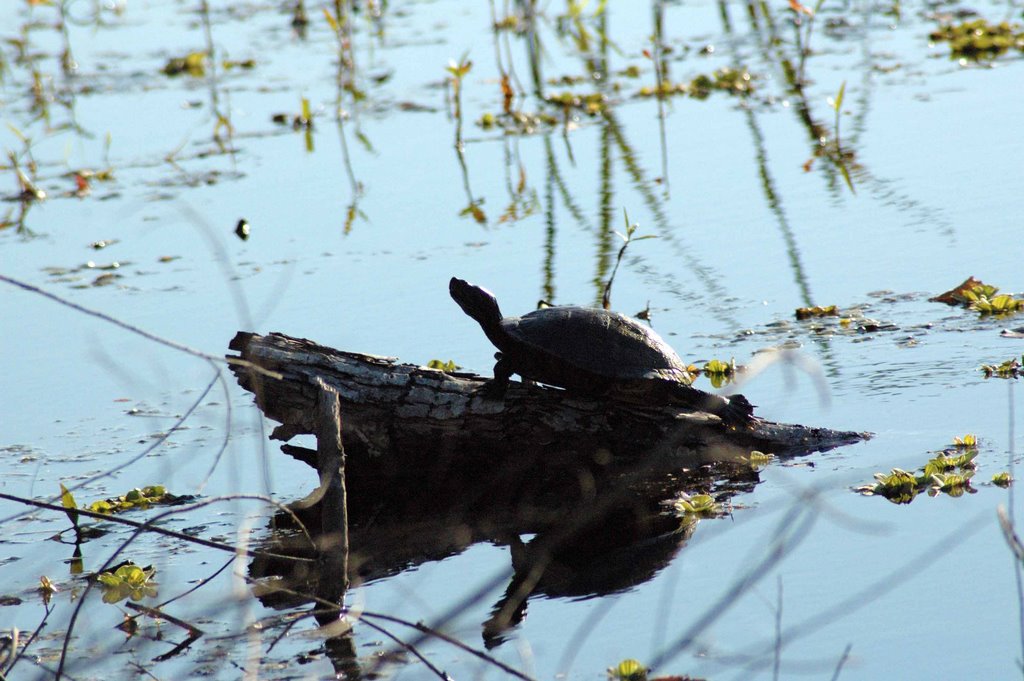
This was the only aquatic reptile we saw, but then we were not able to get to the prime alligator viewing areas.

If there was anything that characterized this visit to Brazos Bend, it would be the vultures. I estimate about there were about 50 Black and Turkey Vultures. They tended to roost in separate trees, but if you look carefully, the uppermost bird on the right in this group of Black Vulture is actually a Turkey Vulture.

Every so often a group of vultures would take flight and circle around. The Black Vultures have the light parts of their wings at the tip, while the Turkey Vultures have the light area extending from the tip along the trailing edge of the wing.
Brazos Bend State Park offers camping, hiking, cycling, birdwatching, fishing, and camping. (Important point of alligator etiquette: If you catch a fish and an alligator wants it, let it have it.)
Monday, November 20, 2006
Thanksgiving in Houston
We are in Houston this week visiting my parents for Thanksgiving.
On our way down we stopped at the Texas Renaissance Festival, as we did last year, and visited my brother Jim. We found to our surprise and pleasure that my niece (sister's daughter) and her boyfriend were participating this year.
Pictures and more will follow soon .... And here they are:
 A costumed participant in the noontime parade
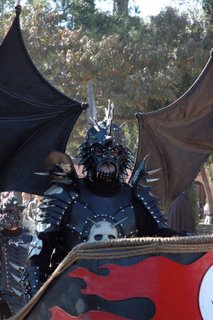 I'm not sure just how period-correct this costume is, but he certainly put a lot of effort into it.
 Hmmmm. Must be one of those space-time anomalies....
 My brother, Jim (AKA The Burley Minstrel)
I decided to leave out the images from the chain-mail fashion show. This is, after all, a blog that I'd like the kids to be able to read.
On our way down we stopped at the Texas Renaissance Festival, as we did last year, and visited my brother Jim. We found to our surprise and pleasure that my niece (sister's daughter) and her boyfriend were participating this year.
Pictures and more will follow soon .... And here they are:
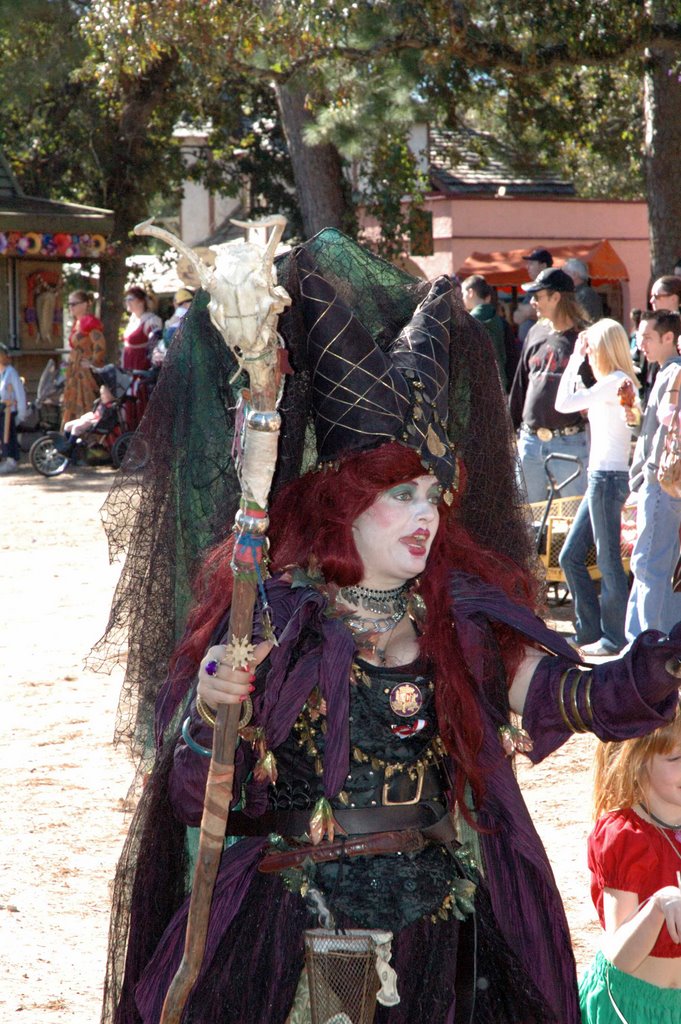 A costumed participant in the noontime parade
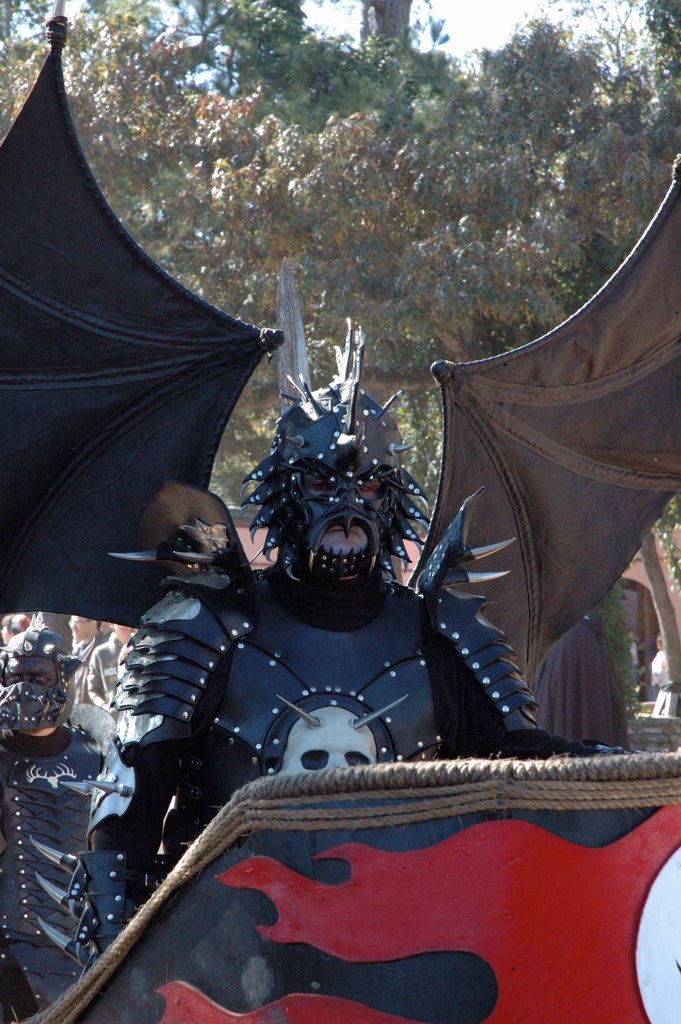 I'm not sure just how period-correct this costume is, but he certainly put a lot of effort into it.
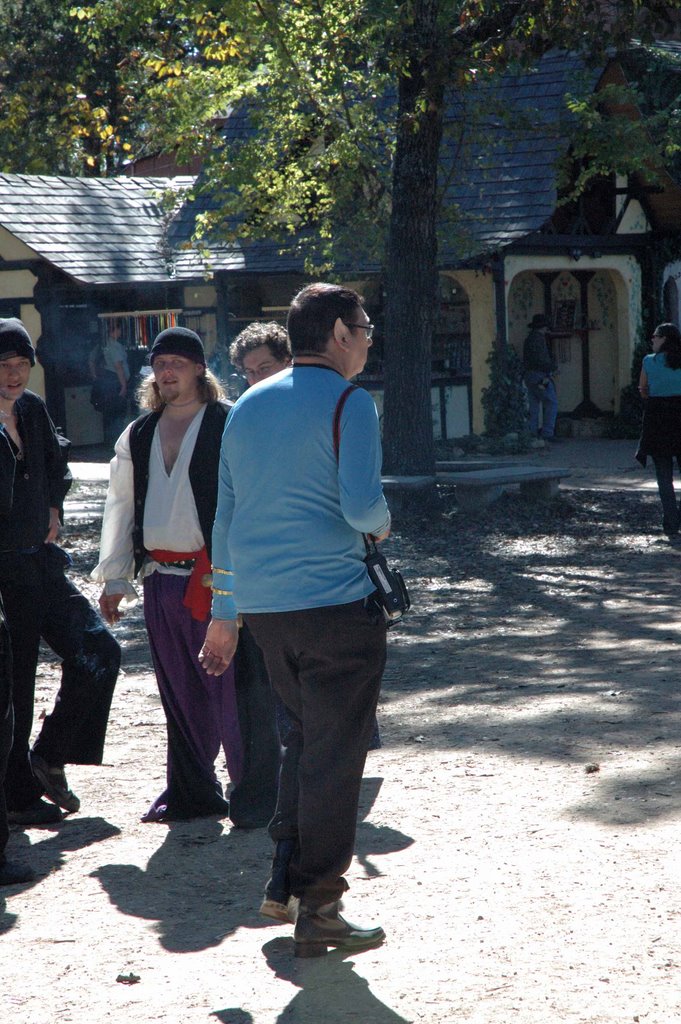 Hmmmm. Must be one of those space-time anomalies....
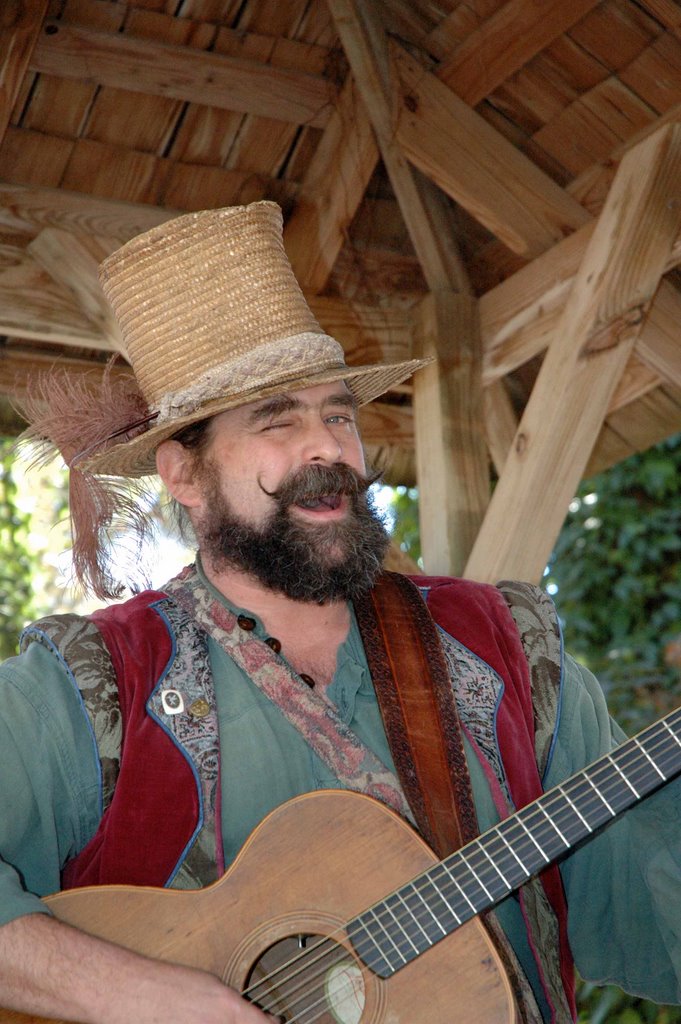 My brother, Jim (AKA The Burley Minstrel)
I decided to leave out the images from the chain-mail fashion show. This is, after all, a blog that I'd like the kids to be able to read.
Thursday, August 17, 2006
Birds and Mammals From Teton-Yellowstone
 Osprey in flight over Excelsior Geyser Crater, YNP
I was taking pictures with my 18-70mm lens, and an eagle and osprey had a little territory dispute over the Excelsior Geyser Crater. By the time I got my 70-300 lens mounted, they both had taken off. I left the longer lens mounted and about 20 minutes later the osprey returned for a few circles around the geyser basin.
 Osprey at Cottonwood Creek, GTNP
Osprey are fish eaters, and far better at catching them than I. Typically they will rest with a good view of a body of water and wait until something interesting happens. In this case, it must have been a boring morning with two phographers circling the dead tree looking for good angles.
 Pika hiding behind a Thimbleberry leaf, Cascade Canyon Trail, GTNP
We saw a leaf running around a talus slope on the trail. It was a pika working on laying in its supply of hay for the winter.
 Yellow-bellied Marmot on Cascade Canyon Trail, GTNP
I lived in Colorado for many years, and thus was quite familiar with marmots long before I ever saw a woodchuck (although from an early age I knew how much wood a woodchuck could chuck).
 Bald Eagle overlooking Jenny Lake, GTNP
As we ended our Cascade Canyon hike and the ferry had started its way back across Jenny Lake, the pilot said that there was an eagle at the top of a tree. I twisted around, zoomed out to 300mm, and grabbed two quck shots just as the pilot stepped in the gas. This one was the sharpest of the two images. I wish the pilot had given us a little more warning, but at least I had the proper lens on at the time.
 Two bison having a tender moment along the Yellowstone river
About 50 or so bison were on either side of the road from Canyon village to Yellowstone Lake, and a park ranger was trying to shoo drivers along, as there was a bit of a back up. When the ranger got a little further along he saw that the main problem was there were bison sauntering back and forth along the road. So he started herding them with his vehicle. Yee-haaaa!
 Bull Moose at Oxbow Bend, GTNP
As we left the park Saturday morning (8/12) for our long drive back we saw a large number of cars parked at the turnout at Oxbow Bend on the Snake River. I look to the right, saw the rack on this beast, and parked. I grabbed the camera and Liam and we circled around to where some other photographers were taking pictures. After Susan secured the car, she came down as well.
This moose, who is as high at his shoulder as I am tall, was browsing the cottonwoods and aspens for his breakfast, and occasionally providing a good pose. Between my son and I we took nearly 50 images. Ah, the joys of large memory cards... The collar intrudes a bit on the scene, but I suppose it is there for a good reason.
Wednesday, August 16, 2006
Vacationing in the Tetons
Earlier I indicated that we would not even try for the Jenny Lake campground, as it is the most popular of the sites. Well, we stayed Saturday night (8/5) just outside the Grand Teton National Park in a Forest Service campground, got up early Sunday (8/6), packed, and hit the Moran Junction entrance about 6:30 AM.
 The view from the tent
I inquired of the ranger as to the chances of getting a site at Jenny Lake, and he said it was worth a try, so we tried. We got to the campground just before 7:oo AM and learned that there were three sites known to be available, and possibly a couple more. We took the first one we saw, and that was our home for the next 6 nights. Jenny Lake CG is tents only while the Lizard Creek CG has a vehicle length limit of 30 feet. Being an inveterate tent camper, the choice was easy.
 The view from the bathroom door
As we drove in we saw a young man carrying a guitar accompanied by two young women. It appeared that they were setting up for a church service, so after we set up the tents, we went over to the amphitheatre for Sunday services.
 Mount Teewinot from the Amphitheater at dawn
These volunteers operate under the auspices of A Christian Ministry in the National Parks, and work in one of the concessions in the park. This organization is non-denominational and is supported by 40 denominations. It was a good and meaningful service, and one could not ask for a more beautiful sanctuary in which to worship.
 Oxbow Bend on the Snake River at dusk
I remember the Tetons from 30 or more years ago when the best view I got was the tip of Grand Teton poking up above the clouds. This time there was not a day when the Teton Range was not clearly visible.
It's time to get to work, so I wait until later to post the mammal and bird images. Maybe I can talk Susan into posting some of her flower images.
 The Hancocks with Mount Moran behind them
Tuesday, August 15, 2006
Fun with Infrared Photography
One of the nice features of digital photography is that the sensor is capable of infrared imaging. Much of it is filtered out by the sensor, but there is enough sensitivity that, with the proper filter, you can take some pretty stunning images.
For these, I used a Nikon D-70 with 18-70mm zoom lense with a Hoya R72 filter. This filter passes only wavelengths above 720 nanometers, which is at the far edge of visibility to human eyes. A tripod was necessary, since the exposures can run up to 5 or more seconds, depending on your aperture. Since infrared focuses at a different point than the visible spectrum, I shot at f/22 to increase depth of field. I processed the raw image with Nikon Capture Editor, saved it as a jpeg, and edited it in Photoshop CS, where I desaturated the remaining red coloration, then resaved it as a smaller jpeg for uploading to the blog.
Blue skies generally render as quite dark, with clouds tending toward their natural color. Deciduous leaves are nearly white and pine needles are lighter than normal, but not as white as, say, aspen leaves. Water tends to be fairly dark.
For those who remember B&W photography and filters, using a red filter would achieve a similar effect with darkening the sky, but leaves and pine needles would be darkened as well. Infrared imaging operates differently and is used in aerial photography to study patterns of disease and stress in forests and cropland.
 Mount Moran, north of the Jenny Lake Junction
 Mount Moran, visible spectrum
 Mount Teewinot, from the east shore of Jenny Lake
 Mount Teewinot, visible spectrum
Monday, August 14, 2006
The Reformed Angler Angling
Jn 21:1 Afterward Jesus appeared again to his disciples, by the Sea of Tiberias. It happened this way: 2 Simon Peter, Thomas (called Didymus), Nathanael from Cana in Galilee, the sons of Zebedee, and two other disciples were together. 3 “I’m going out to fish,” Simon Peter told them, and they said, “We’ll go with you.” So they went out and got into the boat, but that night they caught nothing.
As I mentioned a couple weeks ago, fishing and family vacations are not easy to mix together, but we decided that Friday was the day I was going to fish. Accordingly, on Wednesday I visted the Snake River Angler in Moose Wyoming (just outside the south entrance to Grand Teton National Park) and started asking for advice.
Since anglers are the bread and butter for such businesses, I bought flies as I was asking questions. The man who helped me was quite forthcoming with information, and dissuaded me from my original plan, which was fo fish Leigh Lake (north of Jenny Lake). His advice was to try the area where Cascade Creek goes into Jenny Lake, and then try Cottonwood Creek, the outlet to Jenny Lake.
All the while he was talking, he was adding flies to my pile, and I was able to stop at two dozen -- which was quite enough. My son added a t-shirt to the pile, and attempted to slip in a few other items, mostly with sharp edges. I went for the shirt, but the knives stayed at the store.
I bought a one day license for Friday, and in the morning of August 11, I got up at 6 am and walked to the boat dock for the early-bird ferry across the lake to the Cascade Canyon trailhead. Jenny Lake is a glacially-scoured basin, thus is quite deep (over 250 feet) with a steep dropoff. Where Cascade Creek comes in, it is fairly shallow, though, and I could wade it comfortably. Well, the scenery was great, and the kingfishers were out and about, but I didn't even SEE a fish let alone get one to take second look at my flies, so I took the ferry back about 9:30 am and Susan, Liam, and I piled into the car and drove down to one of the stream accesses to Cottonwood Creek.
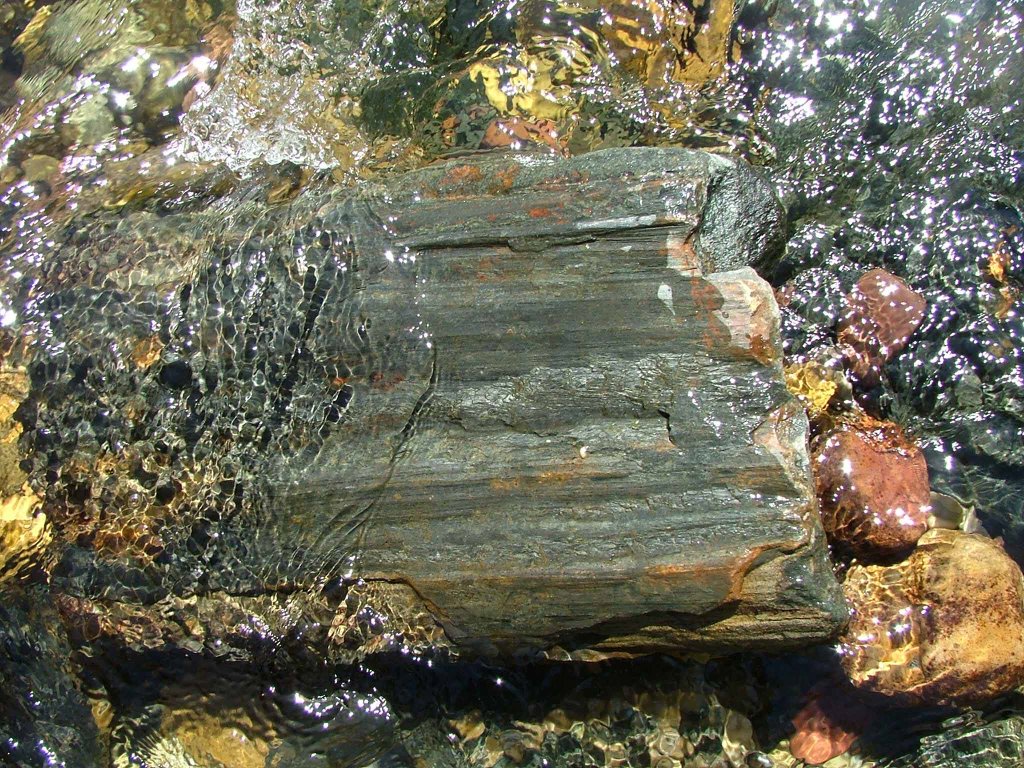 A piece of petrified wood in Cottonwood Creek
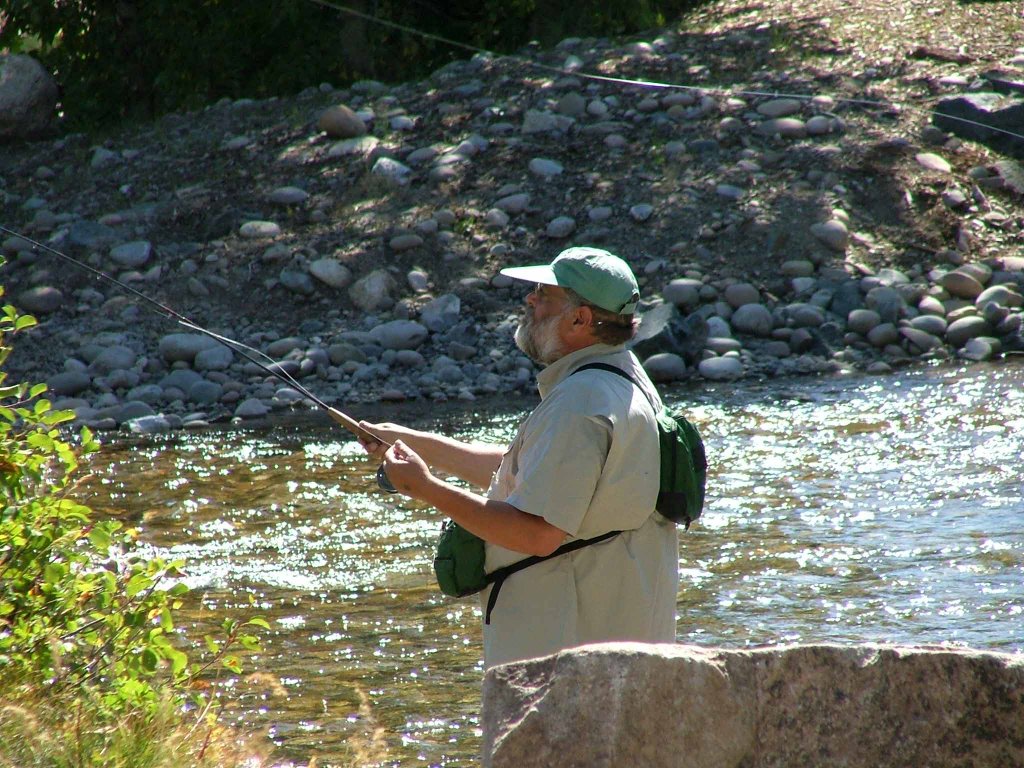 The stream bed of Cottonwood Creek where I fished consisted of large glacial cobblestones between 4 and 12 inches in diameter (or larger). They were slick and rolled easily (you can see where this is heading...) Susan sat on a rock near the creek while I gingerly waded out to where I could cast to likely spots.
I cast upstream and let the fly drift down. There were a number of belly flashes, indicating that a trout had been interested enough to take a second look, but it seemed they were not interested enough to take the offering. At least they were looking up... I tried letting the fly drift past me and downstream near the concrete supports for the one-lane bridge. This was a bit more productive, as I felt a strike. I turned so I could play the fish more comfortable, and the cobbles rolled beneath my feet. I fell and landed on my side in the creek, but I had the presence of mind to make sure I didn't fall on my rod. Susan, who had been taking lots of pictures, somehow failed to record my undignified posture for posterity.
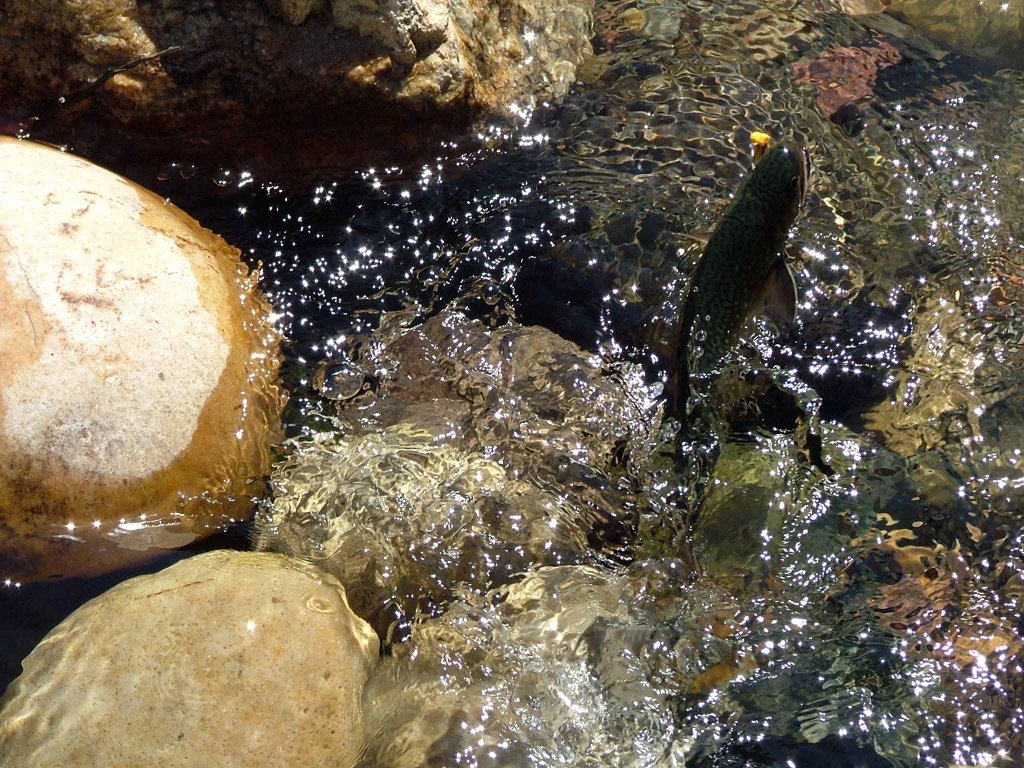 When I got up, I picked up the rod, and to my surprise, the trout was still on. I played it quickly, and as I took it in my hand, it squirmed and took off expeditiously for cover. It was a nice brook trout, about 8 inches.
I kept on fishing at that location, and played 4 more fish (or maybe the same fish 4 times), but these managed to unhook themselves. Or as fly anglers prefer to put it, these were LDRs (long distance releases). In any case, it was nice to be able to fish, and I decided to call it a good day, and we went back to camp and had lunch.
Wyoming (whose laws govern fishing in Grand Teton National Park), is trying to restore native cutthroat trout, and has a special bonus limit on brookies, and I was actually looking forward to helping in that process. My major disappointment though, was that I didn't catch any cutthroats. My fishing preferences tend toward small streams and native trout, and these are often at odds with the management practices. There are cutthroat trout, brook trout, rainbow trout, brown trout, and lake trout to be had in the various waters of Grand Teton and Yellowstone National Parks. Of all these trout, only the cutthroat are native, and when the Lewis and Clark expedition passed near this area 200 years ago, that was what they caught and ate.
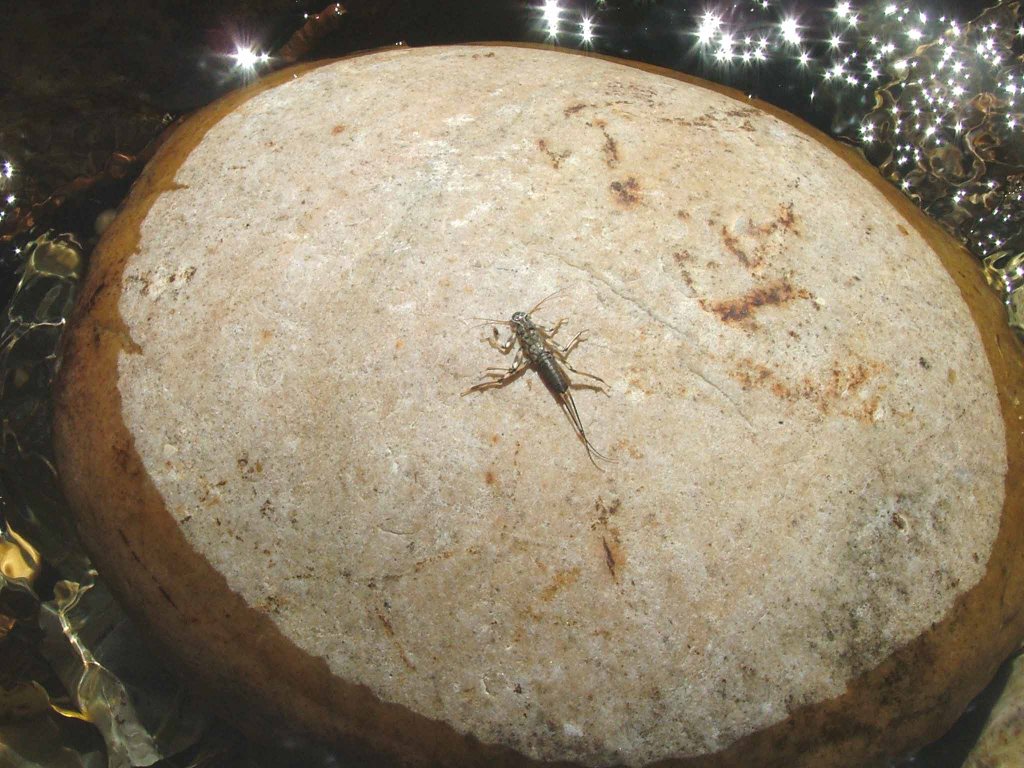 An indicator of what was on the trout's menu
Unfortunately (in my opinion), state fisheries managers had catered to the wishes of anglers to catch large fish and a lot of them, and stocking programs have imported non-native trout to fill this perceived need. It is good to see the state of Wyoming working with the National Park Service to restore the native fish, and I hope they are successful.
It was a great pleasure to fish on Friday, especially in an area of such beauty, and I hope I can fsh more. It is such a relaxing way to spend time.
All photos in this posting were taken by my wife, Susan Melia-Hancock
Sunday, August 13, 2006
In Kearney, Nebraska
We are 2/3 of the way home, and I am taking advantage of the fact that Super 8 has free wireless. After doing the final download of images from my camera to my laptop, I fired up Firefox and checked in with the blogs.
We did about 800 miles yesterday and have about 400 to go, and it should be smooth sailing.
Suffice it to say that the trip was great, and the weather likewise.
Here is a sample of what we saw:
This is the full moon setting over Grand Teton taken at dawn on August 10, 2006.
More will follow over the next few days.
We did about 800 miles yesterday and have about 400 to go, and it should be smooth sailing.
Suffice it to say that the trip was great, and the weather likewise.
Here is a sample of what we saw:
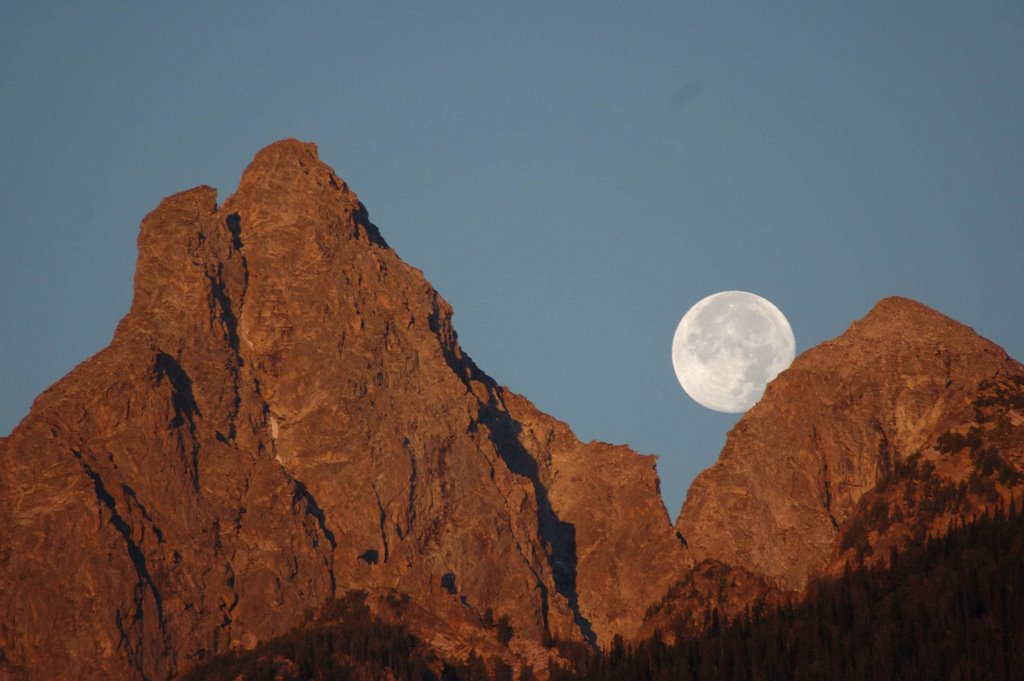
This is the full moon setting over Grand Teton taken at dawn on August 10, 2006.
More will follow over the next few days.
Thursday, August 03, 2006
Off to Teton/Yellowstone
We'll load the Escape tomorrow, and we've resolved to leave when that task is accomplished, rather than set some arbitrary departure time. Of course we never seem to move on schedule, anyway....
The route I plotted takes us past not one, but two Cabelas stores, both in Nebraska. Funny how that turned out. We'll stop and do a little sightseeing, and I plan to purchase some additional outdoors clothing, and I expect Susan and Liam will do the same.
We will start back on August 12, which also happens to the be one year anniversary of the first post on this blog. It has been an interesting year, and one that has been a lot of fun. On my return, I plan to catch up on the news, and start posting again.
In the meantime, I'll be thinking of all of you and, no doubt, wishing that I could attach to a network somewhere. (yes, I will have my laptop. I will be dumping digital images on a daily basis)
Thursday, July 27, 2006
Getting Psyched For Vacation
In a little over a week, my wife, son, and I will get into the car and start heading west with the intention of being at the Lizard Creek Campground of Grand Teton National Park in time to select our home for the next 6 nights. Personally, I am hoping for good shade, and a view of the Northern shore of Jackson Lake.
We'll use this location as a base for day trips into the Yellowstone National Park and the surrounding areas. The entry fee is good for both parks, and we may just pick up a Golden Eagle Passport that will pay the entry fees at most US fee areas.
Cameras and walking staffs will be an important part of our week, and I have perrmission to take some time for fly fishing. Mixing fishing and family vacation is a dicey proposition, and some anglers of my acquaintance just don't do it. Fly fishing is pretty much a solitary activity, and family vacations are, well, a family activity...
The Wyoming non-resident angling fees are, to my Missourian sensibilties, pretty outrageous at $11/day, but fishing in Yellowstone requires only a Yellowstone permit at $20/week. Of course, I am looking at one or two days of fishing, tops, so I may try out the Grand Tetons one day and Yellowstone another day.
I took stock of my flyboxes and I am pretty well fixed for flies, although I plan to tie up a few more before I go.
Missouri flies tend to be pretty sparse with the materials:
 This fly has no name, but is tied with javelina bristles and grizzly hackle.
Western flies tend to be large and fuzzy:
 Stimulator
Here is my version of large and fuzzy:
 Adams Wulff
And if the caddis flies are out and about, here is a pretty simple, yet effective fly:
 CDC Caddis
We'll use this location as a base for day trips into the Yellowstone National Park and the surrounding areas. The entry fee is good for both parks, and we may just pick up a Golden Eagle Passport that will pay the entry fees at most US fee areas.
Cameras and walking staffs will be an important part of our week, and I have perrmission to take some time for fly fishing. Mixing fishing and family vacation is a dicey proposition, and some anglers of my acquaintance just don't do it. Fly fishing is pretty much a solitary activity, and family vacations are, well, a family activity...
The Wyoming non-resident angling fees are, to my Missourian sensibilties, pretty outrageous at $11/day, but fishing in Yellowstone requires only a Yellowstone permit at $20/week. Of course, I am looking at one or two days of fishing, tops, so I may try out the Grand Tetons one day and Yellowstone another day.
I took stock of my flyboxes and I am pretty well fixed for flies, although I plan to tie up a few more before I go.
Missouri flies tend to be pretty sparse with the materials:
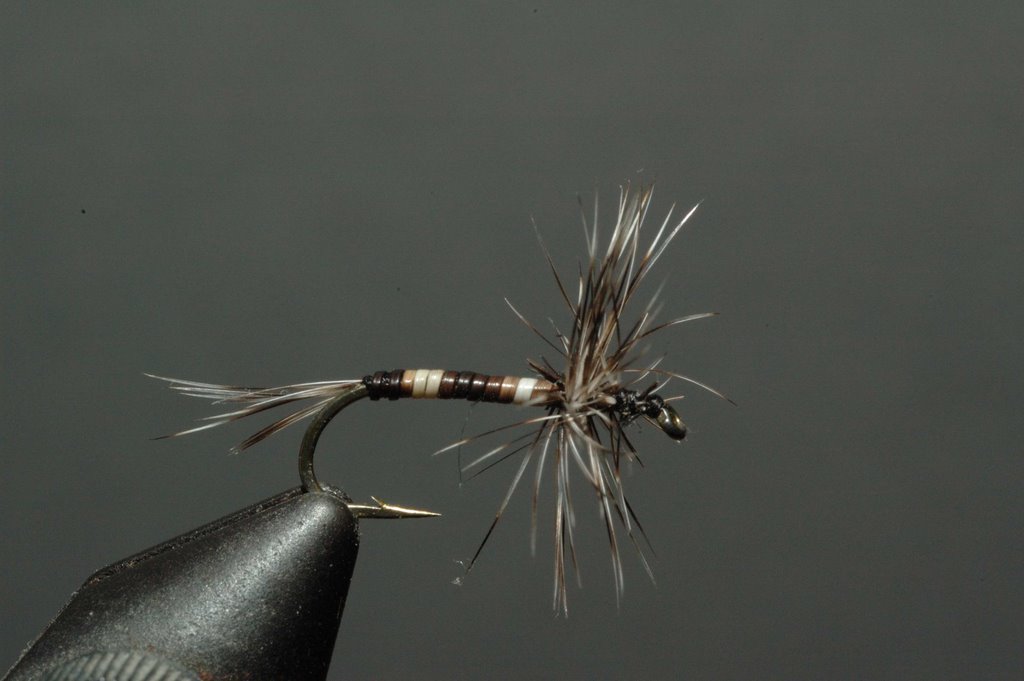 This fly has no name, but is tied with javelina bristles and grizzly hackle.
Western flies tend to be large and fuzzy:
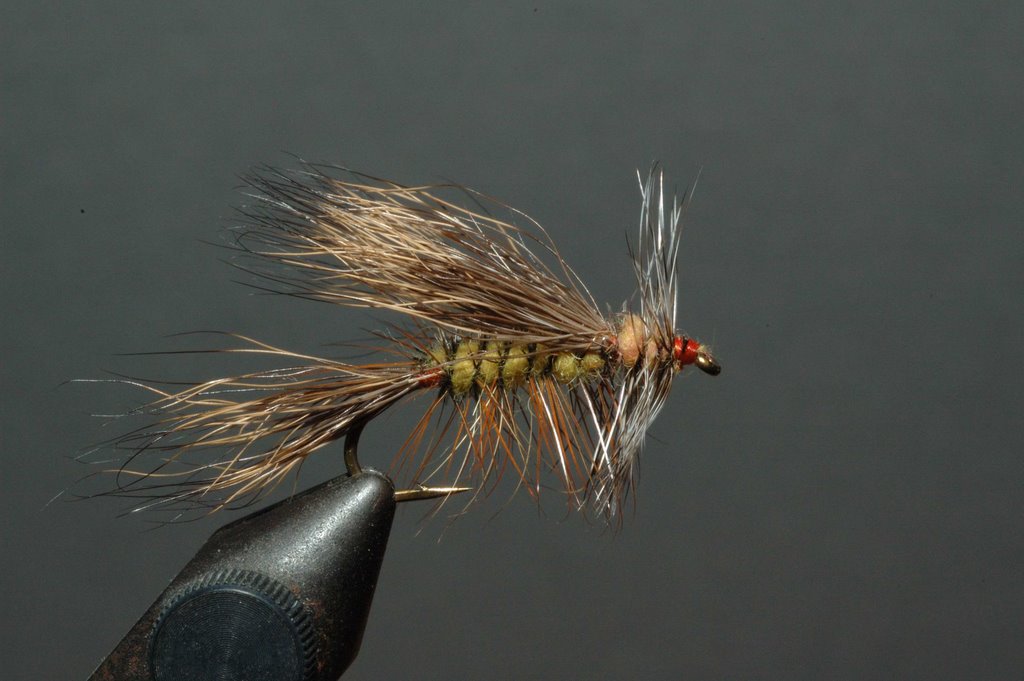 Stimulator
Here is my version of large and fuzzy:
 Adams Wulff
And if the caddis flies are out and about, here is a pretty simple, yet effective fly:
 CDC Caddis
CDC stands for cul de canard and refers to the feathers around a duck's preen gland. These are naturally water-resistant, thus these flies float nicely.
Wednesday, June 28, 2006
Going to Camp
I'll be away for the next 10 days.
I'll be at scout camp with my son, between 15 and 30 other leaders (at various times) and close to 70 boys. We'll be staying at a wide spot in the Osage River (more commonly referred to as Truman Lake) .
If you draw a triangle from Iconium to Osceola to Clinton MO and back to Iconium, the H. Roe Bartle Scout Reservation is roughly at the southeast vertex.

If you click on the image you might be able to read the flag I planted at the camp.
Before H. Roe Bartle became mayor of Kansas City, he was a long-time Boy Scout executive starting in the 1920s in Wyoming, transferring to St. Joseph and finally serving in Kansas City. The H. Roe Bartle Scout Reservation hosts three camps on its 4200 acres and serves 6,600 boys and 3000 leaders yearly.
It lacks an internet connection, so I doubt very seriously I will be posting anything over the next week and a half, but I will be back Saturday July 9th. It'll be rough, but I have gone similar periods without internet. It's the lack of air conditioning that I'm more concerned about....
Subscribe to:
Posts (Atom)